- 021 023 1433
- info@highaccessafrica.co.za
- 104 Bridge way, Crawford, Cape Town, RSA


High Access Africa are a leading wind turbine rotor blade repair specialist having worked on turbine blades in the Africa. We have an experienced team of wind turbine repair technicians ready to repair and maintain your wind turbine blades completing repairs, in most cases, much faster than other O&M companies. By carrying out a thorough yearly inspection, the wind farm operator reduces the risk of a catastrophic failure by highlighting issues and taking action before it becomes a serious problem that could result in costly repairs and lost revenue. Most blade damages are due to wear and tear from the natural elements or due to manufacturing defects and transportation.
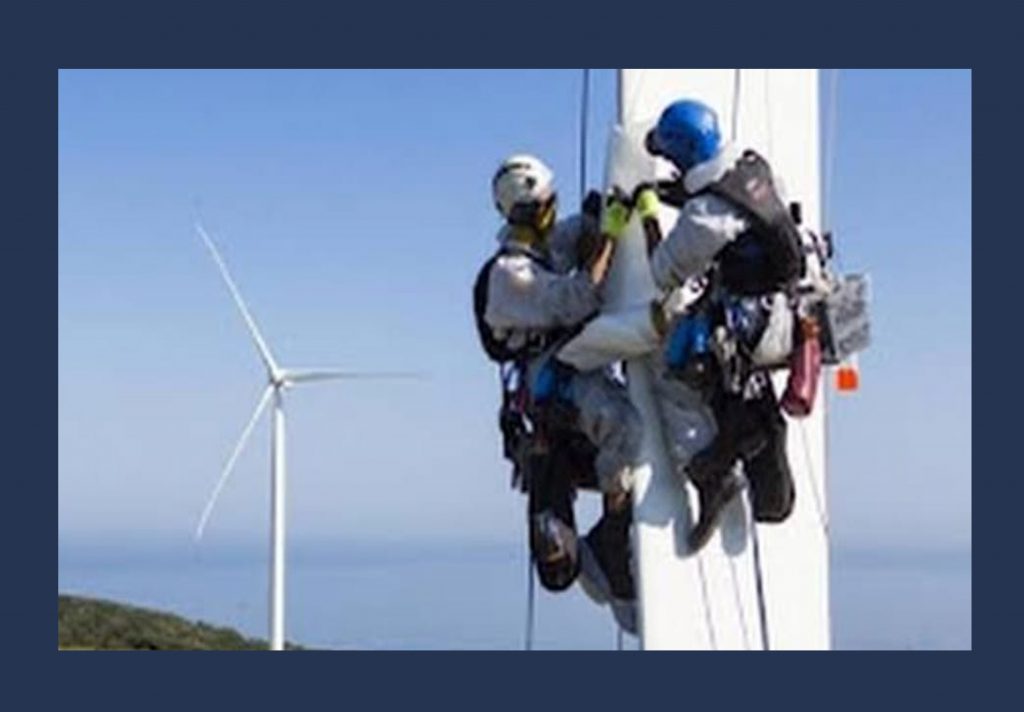
With years of experience, our blade specialists can make blade repairs that prolong the lifespan and overall effectiveness of the asset and can fix damage caused by: leading edge erosion; bond-line failure; moisture intrusion; freeze/thaw cycling; and installation and lightning damages. At High Access Africa we can offer comprehensive solutions through a combination of inspection, preventive maintenance and repair. Preventive maintenance and inspection are essential to maximise asset lifespan, asset integrity and return on investment for wind farm stakeholders. Our blade technicians are IRATA and IWH-certified and GWO-trained. We insist on the highest safety standards, because there is no margin for error when working at height. Rope access is faster and more cost-effective than working with platforms or similar forms of access. It keeps operations and maintenance costs under control, while providing successful outcomes.

Leading edge damage manifests itself as pitting on the blade’s surface, especially on the leading edge, where the most impact will occur. This leading edge erosion causes a reduction in aerodynamic efficiency and a loss in operating performance. Some studies have shown that leading edge erosion can result in a drag increase of up to 500%, leading to a decrease in annual energy output of up to 20%. The effects of this wind turbine rotor blade damage can be apparent in as little as two years from installation. Wind turbines can be reasonably expected to perform continuously for 15 or more years. This means erosion is a significant problem for operators. Once installed, retrofitting of LEP should be a strong investment. How well a wind turbine performs is dependent on many factors, and it should come as no surprise that the wind itself plays a central role. Nevertheless, the nature of wind poses a major challenge when trying to optimise operations.


Home is proudly powered by WordPress